
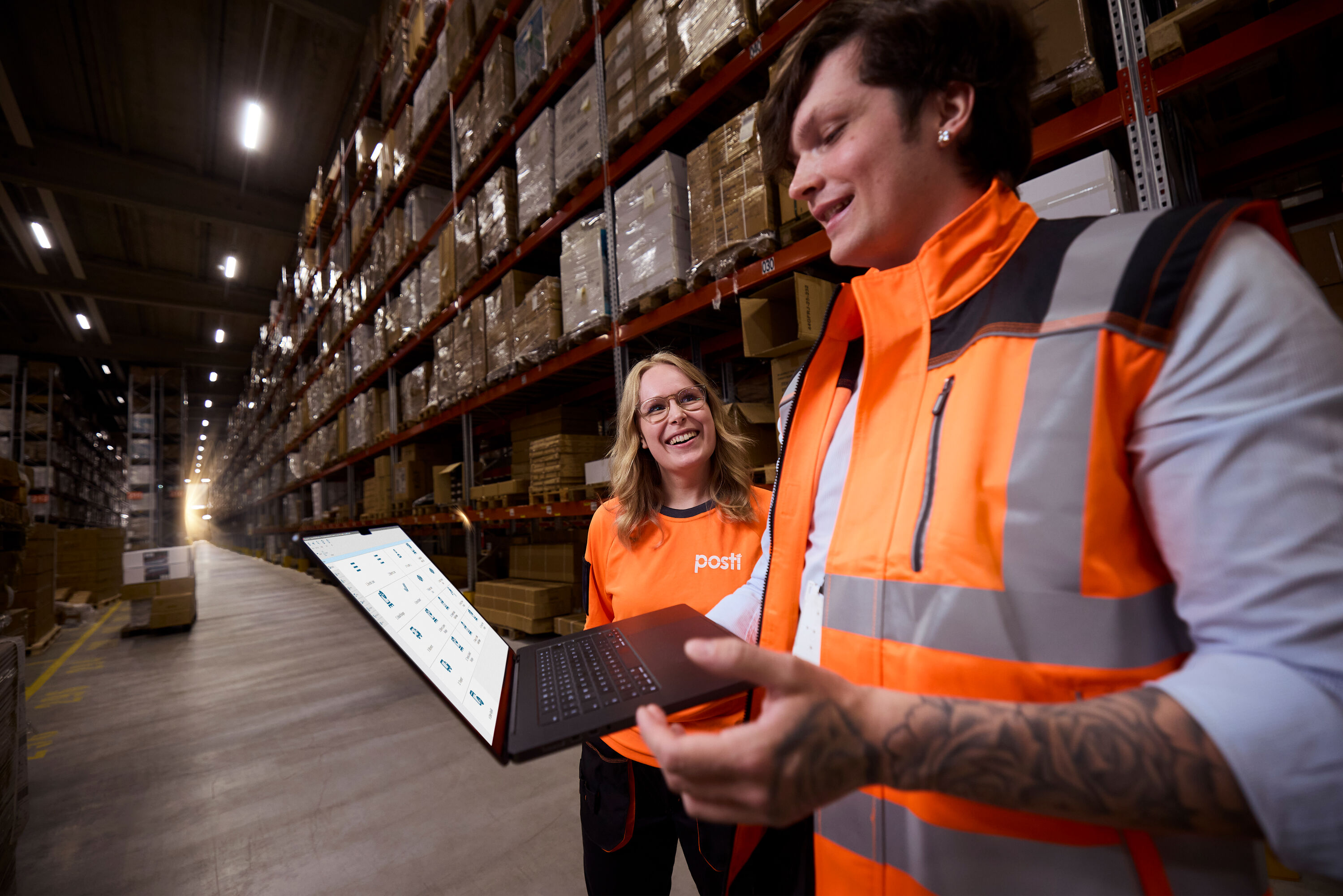
Warehouse space is getting tight just before the busy season. Orders are coming in through several channels, and the goods still need to leave on time, even on the busiest days. In this situation, 3PL can be a way to put agreed logistics tasks in the hands of a partner.
What does 3PL mean in practice? And how can you tell whether outsourcing logistics makes sense for your business? This article looks at what the service can include, the potential benefits and what to agree on before working together.
Article at a glance:
3PL, or third-party logistics, means entrusting agreed logistics tasks to an external partner.
The service can include warehousing, order handling, packing and transport. Its scope depends on what the company and its partner agree.
3PL is worth considering when order volumes grow, seasonal peaks put pressure on the warehouse or managing logistics takes too much time away from other work.
With Posti, you can start by discussing warehousing and then assess which other logistics services your business needs.
What does 3PL mean?
3PL stands for third-party logistics. A company agrees with a logistics partner which tasks the partner will take care of. This can mean one part of the operation or a combination of several services.
In practice, a partner might receive and store goods, handle orders and prepare shipments for transport. The company keeps its own business goals and customer relationships; the division of logistics work is agreed together.
What can 3PL services include?
Consider an online store whose order volumes rise during a campaign. The products need storage space, orders need picking and packing, and shipments need to leave on time. A wholesaler may have a different focus: for example, orders leaving the same warehouse for stores may have different requirements and delivery schedules from online orders.
A 3PL arrangement can combine warehousing, warehouse management, goods handling and transport. Posti’s warehousing services also offer value-added services such as repackaging, labelling, quality checks and pre-installation.
That does not mean every task is automatically included in the same agreement. The right scope depends on the products, the order flow and what the company wants to continue handling itself.
When should a business consider outsourcing logistics?
Growth makes bottlenecks easier to spot. Warehouse space may run short, more people may be needed, or processing orders may take time away from other work. Between peak seasons, the situation may reverse: the business has more space and capacity than it needs at that moment.
It is worth assessing logistics outsourcing in particular if:
orders or product volumes are growing and your warehouse needs more capacity
seasonal peaks and campaigns change the workload significantly
the same warehouse serves several sales channels
managing the warehouse day to day takes time away from the rest of your business.
A potential benefit is more flexible use of space and staff. Outsourcing may also reduce the need to commit resources to your own warehouse, equipment and their development. Costs and responsibilities still need to be assessed using your company’s figures: a partnership should solve an identified problem, not simply move it elsewhere.
What is the difference between 3PL and 4PL?
With 3PL, a partner handles agreed logistics activities, such as warehousing and order handling. With 4PL, the responsibility is usually broader: the partner plans, manages and coordinates different parties across the supply chain. In practice, the difference depends on the responsibilities agreed with the partner.
If you mainly need help with warehouse operations, outsourced warehousing is a natural place to start. If you are looking at broader transport management, explore Posti’s transport solutions.
How to work out what kind of 3PL partnership suits your business
A useful conversation with a potential partner starts with your current flow of goods. What comes into the warehouse, what leaves it, and where does the work slow down? Sometimes the main need is more space. Sometimes the challenge lies in picking, packing or staffing for seasonal peaks.
At a minimum, discuss these points:
Products and orders: What kinds of products do you handle, how many orders do you receive, and how do volumes vary?
Responsibilities: Which tasks would you like the partner to handle, and which would you keep in-house?
Information flow: How will order, product and stock-level information move between your business and the partner?
Goals and current ways of working: What would you like to improve, and which current warehouse practices does the partner need to be familiar with to ensure smooth operations?5.
Follow-up: How will you know whether the agreed setup is meeting your needs, and how will you decide on changes together?
If you want to keep the warehouse on your own premises but need a partner to manage work there, on-site logistics services may also be worth considering. Posti can bring logistics professionals and equipment to the customer’s premises.
Frequently asked questions about 3PL
Can we outsource only part of our logistics?
Yes. You can agree which tasks the partner will handle. The scope can be reviewed if order volumes or other needs change.
Is transport always included in a 3PL service?
Not necessarily. Transport can be combined with other logistics services, but the scope of the partnership is agreed separately. Posti offers both warehousing and transport services.
Is 3PL suitable for a small business?
Company size alone is not the deciding factor. What matters is the support you need with your goods flow and whether the agreed service makes sense for your business. Posti’s warehousing services handle products of different sizes across different industries.
Considering a 3PL partnership?
3PL can help you arrange warehousing and other agreed logistics tasks in a way that fits your business. Tell us about your products, order volumes and what needs the most attention in your logistics right now. Together, we can work out what makes sense to keep in-house and where a partner could help.
Explore Posti’s outsourced warehousing or get in touch.